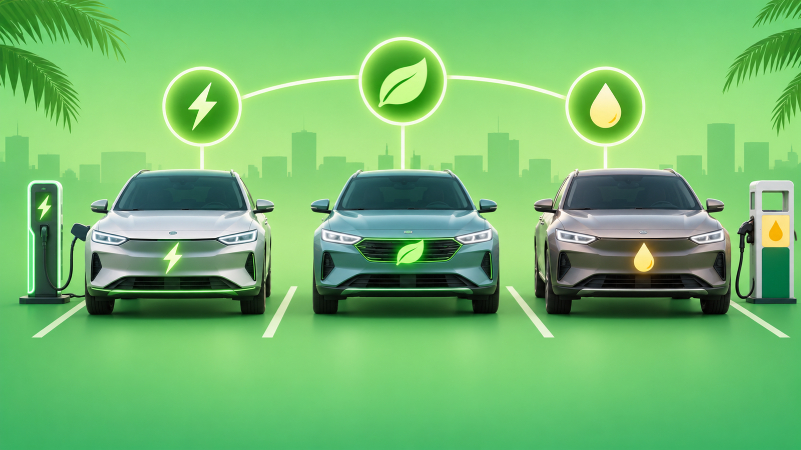
With fuel prices putting more pressure on household budgets, choosing a car in 2026 involves more than comparing purchase prices. Electric vehicles (EVs) and hybrids are becoming more common in the Philippines, giving buyers alternatives to traditional gasoline and diesel cars.
CAMPI-TMA recorded 54,372 electrified vehicle sales during the first nine months of 2026, up approximately 163% from the same period in 2025. This growth reflects increasing interest in vehicles that can reduce fuel consumption.
But switching to an EV or hybrid isn’t automatically the cheaper choice. Your parking situation, daily mileage, access to charging stations, and available budget all affect the cost of ownership.
So, should you choose an EV, a hybrid, or a traditional gas or diesel car? Let’s compare their costs, practical advantages, and limitations to help you decide.
EV, Hybrid, PHEV, or Gas: What’s the Difference?
Before comparing costs, it helps to understand how each powertrain works. Although these vehicles may look similar, they use different energy sources and technologies.
| Vehicle Type | How It Works | Needs Plugging In? |
| Gas or Diesel (ICE) | Uses an internal combustion engine powered by gasoline or diesel. | No |
| Mild Hybrid (MHEV) | Uses a small electric motor to assist the engine and improve efficiency. | No |
| Full Hybrid (HEV) | Combines a gasoline engine and electric motor. The battery charges through the engine and regenerative braking. | No |
| Plug-in Hybrid (PHEV) | Combines an engine and electric motor with a larger battery that can be charged externally. | Yes |
| Battery Electric Vehicle (BEV) | Runs entirely on electricity stored in a rechargeable battery. | Yes |
Is a Mild Hybrid Really a Hybrid?
Yes, but it works differently from a full hybrid.
A mild hybrid uses an electric motor to assist the gasoline engine, particularly during acceleration. However, it generally cannot drive using electric power alone.
A full hybrid can operate on electric power alone under certain driving conditions, while a plug-in hybrid offers a larger battery and can travel farther using electricity.
For buyers comparing fuel savings, understanding these differences matters. Not all hybrid systems deliver the same level of fuel efficiency.
Answer These 3 Questions Before Comparing Prices
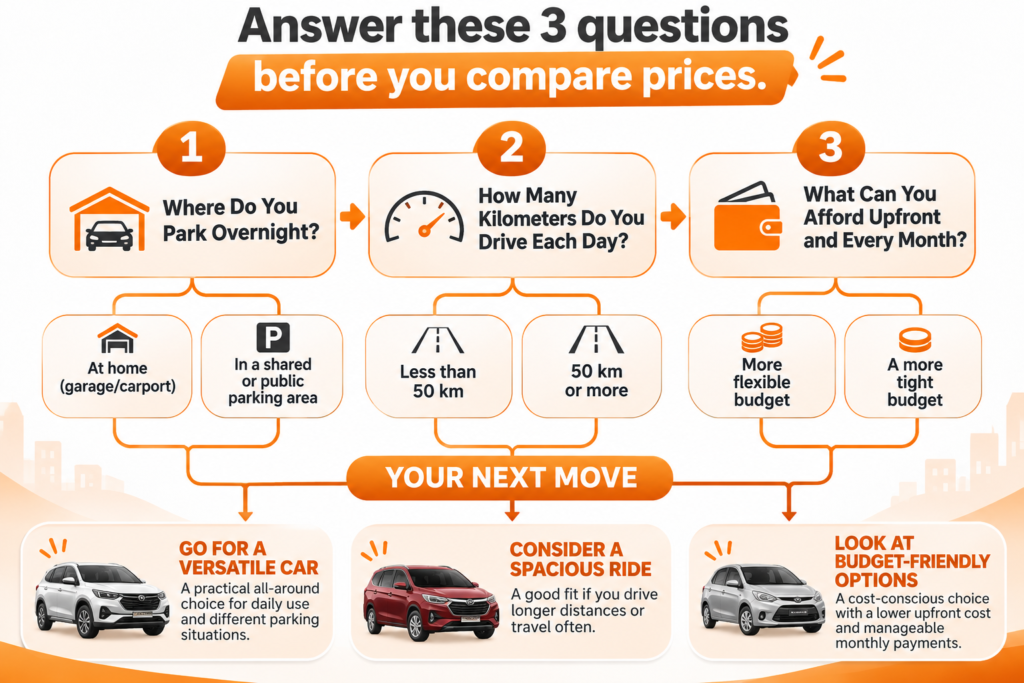
The best vehicle for you depends on how you plan to use it. Instead of starting with the car’s specifications, consider three practical questions.
1. Where Do You Park Overnight?
Your parking situation is one of the biggest factors when considering an EV.
If you own a house with a garage, installing a home charger may be possible. This gives you the convenience of charging overnight instead of making regular trips to public charging stations.
Condo residents and people renting parking spaces face additional considerations. Before purchasing an EV, check with the building administration or property owner about charging permissions and installation requirements.
You should also have an electrician assess whether your home’s electrical system can support the additional load.
If you rely on street parking or don’t have access to a reliable charging location, a conventional hybrid may be more practical.
2. How Many Kilometers Do You Drive Each Day?
Your daily mileage affects how much you can save on fuel or electricity.
For example:
- Mostly city driving: An EV or full hybrid may be suitable for daily commutes.
- Mixed city and highway driving: A hybrid offers flexibility without depending on charging stations.
- Frequent provincial trips: A hybrid or conventional vehicle may be more convenient if charging stations are limited along your usual routes.
- High daily mileage: An EV or hybrid may offer meaningful running-cost savings, provided the vehicle suits your charging and driving requirements.
This is particularly relevant for TNVS drivers, taxi operators, and field sales professionals who spend long hours on the road.
Before choosing an EV, check the charging stations available along your regular routes, not just the stations near your home.
3. What Can You Afford Upfront and Every Month?
A vehicle’s purchase price is only part of the expense.
EVs and some hybrid models can have higher upfront prices than comparable gasoline vehicles. However, they may offer lower energy costs depending on your driving habits.
Consider these expenses together:
- Downpayment
- Monthly loan amortization
- Fuel or charging expenses
- Maintenance and repairs
- Insurance
- Registration and other ownership costs
A vehicle that saves money on fuel may still put pressure on your finances if its monthly amortization is too high.
Your goal should be to find a vehicle that fits both your transportation needs and your monthly budget.
Fuel vs. Electricity: What Does Each Option Cost Per Kilometer?
One practical way to compare an EV, hybrid, and conventional car is to calculate how much you spend on energy for every kilometer driven.
Instead of relying entirely on advertised fuel efficiency, use actual energy prices and vehicle consumption figures whenever available.
For gasoline and diesel vehicles:
Fuel cost per kilometer = Price per liter ÷ Kilometers per liter
For electric vehicles:
Charging cost per kilometer = Price per kWh ÷ Kilometers per kWh
Current Electricity and Fuel Prices in the Philippines
The following figures provide a reference for comparing energy costs. Prices are based on the available November 2026 data and can change over time.
| Energy Source | Reported Price |
| Meralco residential electricity | ₱15.5510/kWh |
| Average public AC charging | ₱24.46/kWh |
| Average public DC charging | ₱31.49/kWh |
| NCR gasoline | ₱60.20 to ₱86.00/liter |
| NCR regular diesel | ₱80.60 to ₱90.09/liter |
Sources: Meralco rate reported by Daily Tribune, November 13, 2026; DOE charging fee monitoring reported by SunStar, 2026; DOE fuel price estimates reported by Daily Tribune, November 17, 2026.
Example: How Much Does It Cost to Charge an EV?
According to an EVAP representative cited by GMA News, a BYD Dolphin can achieve approximately 7 kilometers per kWh under the cited benchmark.
Using that figure, here’s how the estimated charging cost changes depending on where you charge:
| Charging Location | Cost per kWh | Estimated Cost per Kilometer |
| Home charging | ₱15.55 | ₱2.22 |
| Public AC charging | ₱24.46 | ₱3.49 |
| Public DC charging | ₱31.49 | ₱4.50 |
These figures are calculated estimates, not guaranteed real-world costs. Actual consumption depends on driving conditions, vehicle efficiency, air-conditioning use, and charging losses.
The comparison also shows why home charging matters. EV owners who depend entirely on public fast chargers may experience smaller savings than those who can charge at home.
Why Fuel-Price Changes Matter
Gasoline and diesel prices can change several times within a month, affecting the cost of daily transportation.
According to the DOE figures cited in the research, cumulative year-to-date adjustments as of October 27, 2026, represented net increases of ₱68.55 per liter for gasoline and ₱65.63 for diesel.
Electricity prices also fluctuate. Meralco’s residential rate, for example, increased from ₱15.0615 per kWh in October to ₱15.5510 in November 2026.
An EV can reduce your exposure to gasoline and diesel price increases, but electricity isn’t completely protected from price changes.
The practical advantage comes from having another energy option and potentially spending less per kilometer.
The Costs Beyond the Pump: Maintenance, Battery, Insurance, and Resale
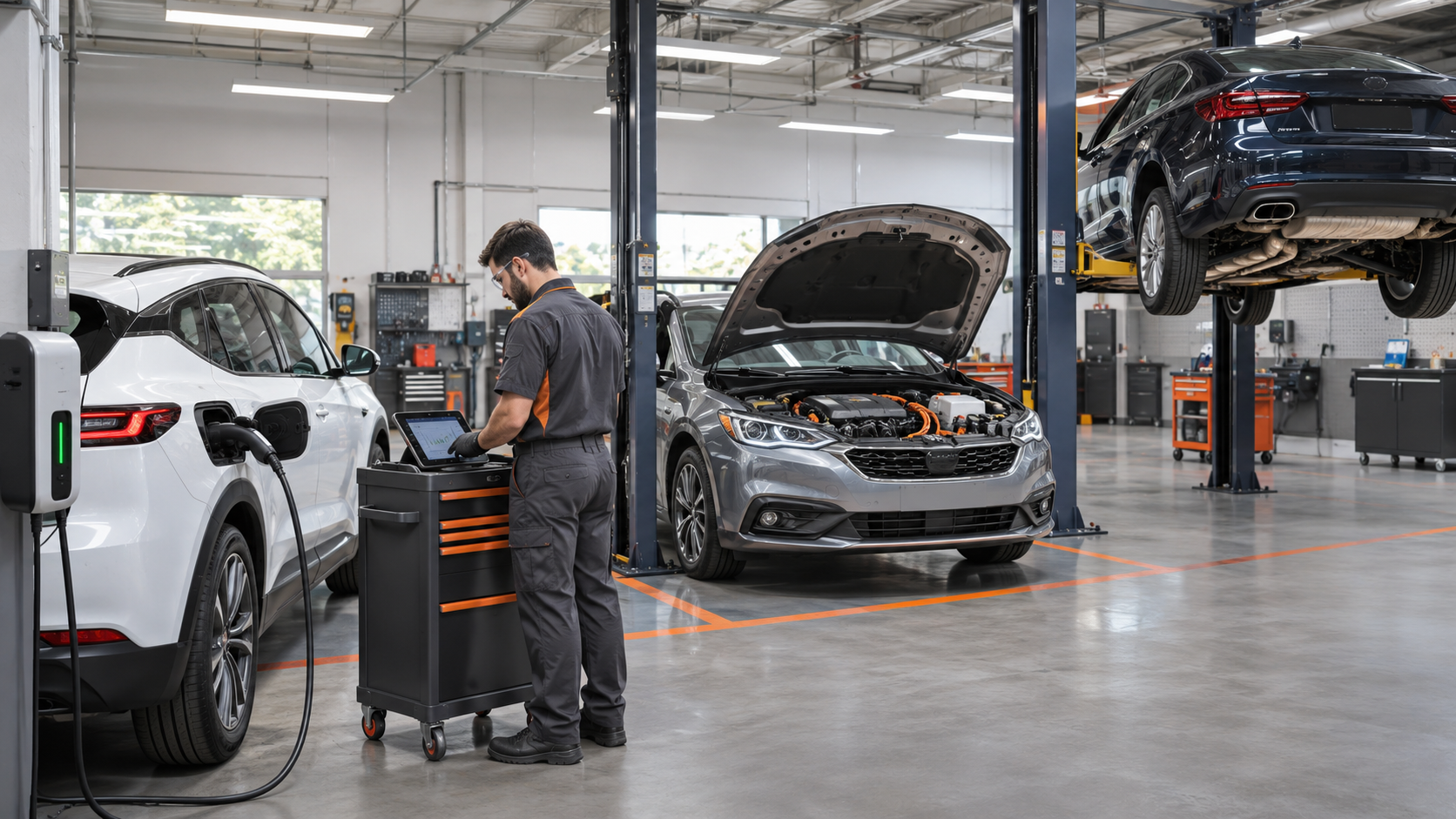
Energy expenses are only one part of owning a vehicle. Before deciding, consider the costs that may arise throughout its ownership.
Maintenance and Preventive Maintenance Service (PMS)
EVs generally require less routine mechanical maintenance because they don’t have conventional engines, engine oil, or exhaust systems.
Hybrids still have gasoline engines alongside their electric components, so they require maintenance for both systems.
Gasoline and diesel vehicles also need regular servicing, including oil changes, filters, and other engine-related maintenance.
However, lower maintenance requirements don’t automatically mean every EV will be cheaper to repair. Parts availability, technician expertise, and service center accessibility also matter.
Before buying, ask the dealer for a five-year preventive maintenance schedule and estimated service costs.
Battery Lifespan and Warranty: What Should You Check?
Battery condition is one of the biggest considerations when purchasing an EV or hybrid.
Modern manufacturers offer battery warranties, but coverage differs depending on the brand and model.
For example:
- BYD Atto 2: An advertised Blade Battery warranty of eight years or 160,000 kilometers.
- VinFast: Battery coverage of up to 10 years or 200,000 kilometers for vehicles purchased with the battery included, depending on the applicable terms.
These are individual manufacturer examples, not standard warranty coverage for all electrified vehicles.
Before purchasing, ask the dealer about:
- Battery warranty duration and mileage limits
- Minimum battery state-of-health requirements
- Conditions that qualify for battery replacement
- Warranty transferability to a second owner
- Exclusions involving flooding and water damage
Battery replacement costs can vary significantly by vehicle and manufacturer. Ask for a written estimate rather than relying on general online figures.
Insurance: Does Your Coverage Include the Battery?
Insurance is another expense worth checking before purchasing an EV or hybrid.
Ask your insurance provider whether comprehensive coverage includes the high-voltage battery, charging equipment, and damage caused by natural disasters such as flooding.
Don’t assume that every policy provides the same protection.
Request a quotation for the specific vehicle you’re considering so you can compare the actual insurance cost.
Resale Value: The Least Certain Ownership Cost
Resale value can affect the overall cost of owning any vehicle.
However, estimating the resale value of EVs in the Philippines can be challenging because the local used-EV market has a shorter history than the market for conventional vehicles.
Battery condition, technology updates, brand reputation, parts availability, and service network coverage may influence what buyers are willing to pay.
If you plan to sell your vehicle after several years, ask the dealer about its resale support programs and available battery health assessments.
You can also read our guide on what affects your car’s resale value when you sell.
Government Incentives: What Do EV and Hybrid Buyers Get in 2026?
Government incentives can influence the total purchase cost of electrified vehicles in the Philippines.
Under the Electric Vehicle Industry Development Act (EVIDA), or Republic Act No. 11697, the government provides fiscal and non-fiscal incentives to encourage EV adoption.
Some relevant policies include:
1. Number Coding Exemption
EVIDA provides number-coding exemptions for qualified electric vehicles, including recognized hybrid and plug-in hybrid models.
However, buyers should confirm current implementation requirements with the DOE and the relevant traffic authorities before relying on this benefit.
2. Excise Tax Treatment
Pure electric vehicles are exempt from applicable excise taxes, while hybrid vehicles are generally subject to 50% of the applicable excise tax rates.
This can affect the vehicle’s overall purchase price.
3. Import Tariff Incentives
Executive Order No. 62 provides reduced import tariff rates for covered electrified vehicles under the applicable tariff schedule through 2028.
Buyers should check the specific vehicle classification and applicable tariff treatment rather than assuming every model receives the same benefit.
4. Other Registration Incentives
Additional benefits, including motor vehicle user charge discounts, may apply under specific rules.
Confirm the applicable rates and eligibility directly with the LTO or relevant government agencies before including them in your purchase calculations.
Will EV Incentives Continue Beyond 2028?
Some EV incentives have specific expiration dates.
EVIDA’s non-fiscal incentives are scheduled to expire in 2030. Meanwhile, Senate Bill No. 2270 has proposed extending certain incentives from eight to 12 years.
However, a proposed bill is not automatically an existing benefit. Buyers should check its legislative status before making purchasing decisions based on a possible extension.
For now, calculate your vehicle’s affordability using incentives that are already in effect.
Philippine Realities Most EV vs. Hybrid Guides Ignore

The Philippines has unique driving conditions that can affect the practicality of owning an EV, hybrid, or conventional vehicle.
Here are some considerations that deserve attention.
Flooding and Waterlogged Roads
Flooding is a regular concern for Filipino motorists, particularly in areas affected by heavy rainfall and typhoons.
EVs have high-voltage electrical systems and sealed battery enclosures designed to meet specific protection standards. However, this doesn’t mean every electric vehicle is safe to drive through floodwater.
The same caution applies to conventional and hybrid vehicles.
Before buying, check the manufacturer’s specified water-wading depth and relevant protection ratings. Also, confirm your insurance coverage for flood-related damage.
Never assume that an EV can safely cross deep floodwater simply because its battery is enclosed.
Provincial Trips and Charging Station Availability
Charging infrastructure remains an important consideration for drivers who frequently travel outside Metro Manila.
According to DOE figures reported by SunStar, the Philippines had 1,876 registered EV charging points as of August 31, 2026. These included AC charging points, DC charging points, and battery-swapping facilities.
The DOE has also identified a target of 7,000 EV charging stations nationwide by 2028.
However, the availability of charging stations isn’t evenly distributed across the country.
For provincial drivers, this means planning trips carefully and checking charging locations before departure.
You can use the DOE’s EV Charging Station Locator to identify available charging facilities along your intended route.
If you regularly travel through areas with limited charging infrastructure, a conventional hybrid may provide more flexibility because it doesn’t depend on public charging stations.
Brownouts and Home Electricity Supply
Power interruptions are another practical consideration, especially in areas that experience frequent brownouts.
An EV owner who depends on home charging may need to adjust their charging schedule when electricity is unavailable.
A full hybrid or conventional vehicle doesn’t require external charging, making it less dependent on household electricity availability.
If you live in an area with frequent power interruptions, consider how this could affect your daily transportation routine.
Which Should You Buy? 5 Common Filipino Driver Profiles
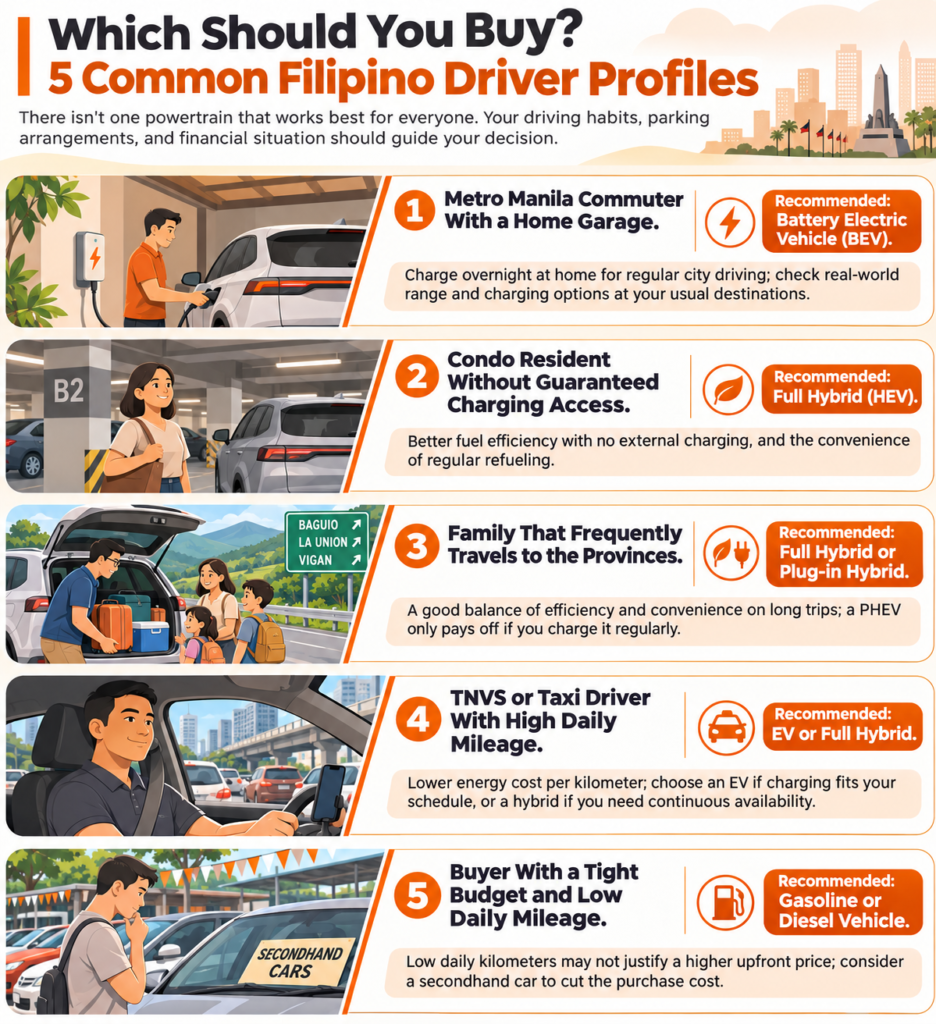
There isn’t one powertrain that works best for everyone. Your driving habits, parking arrangements, and financial situation should guide your decision.
Here are five common buyer situations to consider.
1. Metro Manila Commuter With a Home Garage
Recommended: Battery Electric Vehicle (BEV)
If you have a private garage and can install a home charger, an EV can be a practical choice for regular city driving.
You can charge overnight and potentially reduce your daily transportation expenses.
However, check your vehicle’s real-world driving range and make sure your usual destinations have suitable charging options.
2. Condo Resident Without Guaranteed Charging Access
Recommended: Full Hybrid (HEV)
A full hybrid is a practical alternative if you don’t have access to a private charging station.
It combines a gasoline engine with an electric motor without requiring external charging.
You can benefit from improved fuel efficiency while maintaining the convenience of traditional refueling.
3. Family That Frequently Travels to the Provinces
Recommended: Full Hybrid or Plug-in Hybrid
For families that regularly travel long distances, a hybrid can offer a good balance between fuel efficiency and convenience.
A PHEV may also work if you can charge it regularly and make good use of its electric-only driving range.
However, buying a PHEV without regularly charging it may reduce its potential savings.
4. TNVS or Taxi Driver With High Daily Mileage
Recommended: EV or Full Hybrid
Drivers who spend many hours on the road may benefit from lower energy expenses per kilometer.
An EV can be attractive if charging is accessible and can fit into the driver’s working schedule.
A full hybrid may be more practical if the driver needs continuous availability without spending time looking for charging stations.
For eligible operators, you can also explore financing options for TNVS and taxi operators.
5. Buyer With a Tight Budget and Low Daily Mileage
Recommended: Gasoline or Diesel Vehicle
If you drive relatively few kilometers each day, the potential fuel savings from an EV or hybrid may not justify paying significantly more upfront.
A gasoline or diesel vehicle may be more affordable, particularly if you find a model that fits your transportation needs.
You can also consider buying a secondhand car to reduce the initial purchase cost.
Read our guide on buying a secondhand car in the Philippines before making your decision.
Can You Afford the Switch? Financing an EV, Hybrid, or Gas Car
After identifying the powertrain that suits your driving habits, the next step is checking whether you can comfortably afford it.
An EV or hybrid may offer lower running costs, but a higher purchase price can result in a larger downpayment and monthly loan amortization.
For example, imagine two vehicles with different purchase prices. The more expensive vehicle may save money on energy every month, but those savings need to be compared against its additional loan payments.
Consider the following:
- How much is the required downpayment?
- How much will your monthly amortization be?
- How much do you currently spend on fuel?
- How much could you realistically save on charging or fuel?
- Can you still cover insurance, maintenance, and other household expenses?
Avoid extending your loan term simply to make a more expensive vehicle appear affordable. A lower monthly payment may also mean paying more interest over the entire loan period.
If you’re considering vehicle financing, explore SAFC Car Loan and review the applicable financing requirements.
Existing car owners who want to improve their monthly cash flow may also explore Car Loan Takeout, subject to product eligibility and approval.
The goal isn’t simply to purchase a more fuel-efficient vehicle. It’s to choose one that makes financial sense throughout your ownership.
Showroom Checklist: 10 Questions to Ask Before You Sign
Before committing to an EV, hybrid, or conventional vehicle, ask the dealer these questions:
- What is the actual battery warranty? Check the number of years, mileage limit, and replacement conditions.
- How much will preventive maintenance cost? Request an estimated five-year PMS schedule.
- Where is the nearest authorized service center? Check whether technicians and replacement parts are available in your area.
- How much does home charger installation cost? Ask who will handle the installation and whether additional electrical work is required.
- What is the vehicle’s specified water-wading depth? Check the manufacturer’s official specifications.
- Does the insurance cover the battery and flood damage? Review the actual policy exclusions.
- Is the vehicle recognized for government incentives? Confirm its eligibility with the appropriate government agency.
- What is its real-world driving range or fuel efficiency? Ask for figures under realistic traffic and air-conditioning conditions.
- How are software updates and technical issues handled? Check the manufacturer’s after-sales support.
- Can I finance this specific vehicle? Confirm the lender’s eligibility requirements, downpayment, and applicable loan terms.
Taking time to verify these details can help prevent unexpected expenses after purchasing your vehicle.
Final Thoughts

Choosing between an EV, hybrid, and gasoline or diesel car comes down to three things: where you park, how far you drive, and what you can afford.
An EV may suit drivers with reliable home charging and regular city routes. A hybrid offers flexibility for those who want better fuel efficiency without depending on charging stations. A conventional gasoline or diesel vehicle may remain the practical choice for buyers prioritizing a lower upfront cost or frequent travel in areas with limited charging infrastructure.
There is no universal winner. The right vehicle is the one that fits your daily routine without putting unnecessary pressure on your finances.
If you’re planning to purchase a vehicle, explore your financing options and visit a South Asialink Finance Corporation branch to learn more about the available loan products and requirements.
Editorial note: Energy prices and charging rates in this article use the November 2026 reference figures provided. These may change over time. Vehicle specifications, government incentives, and financing eligibility should be confirmed with the relevant manufacturers, government agencies, and financial institution before making a purchase decision.