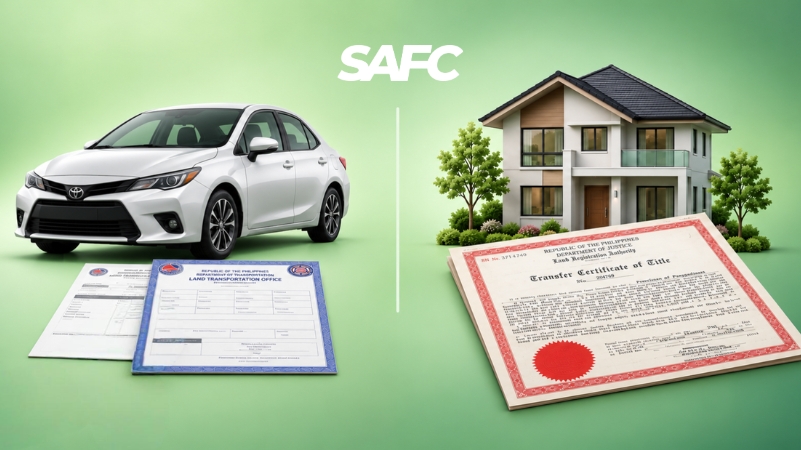
Need cash and own an asset you can pledge? You have two common paths in the Philippines: a sangla OR/CR loan against your vehicle, or a sangla titulo loan against your land. Both let you borrow against something you already own — and both let you keep using that asset while you repay. The right choice depends on what you own, how much you need, and how quickly.
This guide breaks down each collateral loan in plain terms, then puts them side by side so you can decide which one actually fits your goal.
The core difference: A sangla OR/CR loan is secured by your vehicle’s registration (and you keep driving it), while a sangla titulo loan is secured by your land title (and you keep using the property).
What is a Sangla OR/CR Loan?
“Sangla OR/CR” means pledging your vehicle’s Official Receipt (OR) and Certificate of Registration (CR) as collateral for a loan. It’s also called an OR/CR loan or a vehicle collateral loan.
What you pledge: Your registration documents against the value of the vehicle. You typically continue driving and using the car while you repay.
Who it fits: Car or truck owners who need funds without selling the vehicle they rely on for work, family, or business.
What happens to your asset: You keep possession and continue using the vehicle for the loan term, as long as you meet your obligations.
Typical use case: Faster cash needs, emergency expenses, working capital, tuition, or bridging a short gap — where the borrower owns a vehicle but not necessarily land.
Related deep-dive: How Sangla OR/CR Process Works
What Is a Sangla Titulo Loan?
“Sangla Titulo” means using your property’s title as collateral for a loan — whether that property is a house and lot, condominium, or residential or commercial lot. It’s the Filipino term for a title loan, or property-backed loan.
What you pledge: The title to real property — typically titled land or a house-and-lot — as security for the loan.
Who it fits: Property owners with a clean, transferable title who need a larger amount than a vehicle can typically support, or who prefer a longer repayment horizon.
What happens to your asset: You generally keep living in or using the property while you repay. The lender’s security is registered against the title, not physical possession of your home.
Typical use case: Bigger-ticket goals — business expansion, consolidating higher-cost debt, or funding a major life expense — where the borrower owns titled land.
Sangla OR/CR vs. Sangla Titulo: Side-by-Side Comparison
| Factor | Sangla OR/CR | Sangla Titulo |
| Collateral pledged | Vehicle registration (OR/CR) | Land / property title |
| Borrower profile | Vehicle owner | Titled-property owner |
| Do you keep using the asset? | Yes — keep driving | Yes — keep using the property |
| Loanable amount (relative) | Generally smaller; tied to vehicle value | Generally larger; tied to property value |
| Ideal use case | Fast, shorter-term needs | Larger, longer-term goals |
| Key consideration | Vehicle depreciates over time | Property title must be clean and transferable |
Which One Is Right for You? Answering the Real Questions
Which loan gives you more money?
As a rule, property is worth more than a vehicle, so a sangla titulo loan usually supports a larger loanable amount than an OR/CR loan of the same profile. If your goal needs significant capital, land is the stronger collateral. If you need a modest amount fast, your vehicle may be more than enough.
Which loan is faster?
Vehicle valuation and document checks are typically simpler than property appraisal and title verification, which is why OR/CR loans are often associated with quicker turnaround.
What if you own both a vehicle and land?
Then it comes down to your goal and appetite for risk:
- Need a smaller amount quickly? Pledge the vehicle (OR/CR) and keep your title untouched.
- Need a larger amount or a longer term? Pledge the title (sangla titulo), which can unlock more funds.
- Want to keep your biggest asset out of the equation? Start with the OR/CR loan.
Which loan puts your asset at lower risk?
Both loans carry the same fundamental risk: if you can’t repay, the pledged asset is on the line. The practical difference is what you’d stand to lose. Defaulting on an OR/CR loan risks your vehicle; defaulting on a sangla titulo loan risks your land — usually a far more valuable and irreplaceable asset. Many borrowers weigh a title loan more carefully for exactly this reason.
Borrow only what you can comfortably repay, and read every term before signing.
A Simple Way to Decide
- What do you own? Only a vehicle → OR/CR. Only land → titulo. Both → go to step 2.
- How much do you need? Smaller and fast → OR/CR. Larger → titulo.
- How long do you need to repay? Short term → OR/CR. Longer term → titulo.
- Which asset are you more comfortable pledging? Let your risk tolerance make the final call.
If you’re still unsure, a quick conversation with a Loan Advisor or our Customer Care Team can match your situation to the right product.