When you need funds, a personal loan is usually the first option that comes to mind — but it isn’t always the best fit. Unsecured personal loans in the Philippines typically require a strong credit history, proof of stable income, and a minimum annual salary that many freelancers, small business owners, and informal-sector workers can’t document. Others simply want a larger amount or a lower rate than an unsecured loan allows.
The good news: personal loans aren’t your only option. This guide compares seven personal loan alternatives available in the Philippines — from collateral-based loans like Sangla OR/CR and Sangla Titulo, which unlock the value of assets you already own, to government, cooperative, and employer-based options. For each one, you’ll see how it works, who it’s best for, and the risks to weigh before you commit.
One rule applies to every option here: borrow only from BSP-supervised banks or SEC-registered financing companies. Informal lenders may promise speed, but they operate outside consumer protection laws.
Personal Loan Alternatives at a Glance
| Alternative | Collateral needed | Typical amount range | Best for |
| Sangla OR/CR loan | Car/truck OR/CR (you keep the vehicle) | Based on vehicle appraisal | Vehicle owners needing fast, larger amounts |
| Sangla Titulo loan | Land title | Based on property appraisal | Property owners needing substantial funds |
| Car Loan Takeout / refinancing | Existing financed vehicle | Depends on remaining equity | Owners with an existing car loan seeking better terms or extra cash |
| SSS / Pag-IBIG salary loan | None (contribution-based) | Tied to contributions | Members with sufficient contribution history |
| Cooperative loan | None (membership-based) | Varies by co-op | Co-op members wanting lenient terms |
| Credit card installment | None | Card limit | Planned purchases you can repay within terms |
| Salary advance | None (employer-based) | Usually a fraction of monthly pay | Small, short-term needs |
1. Sangla OR/CR: Unlocking the Value of Your Car
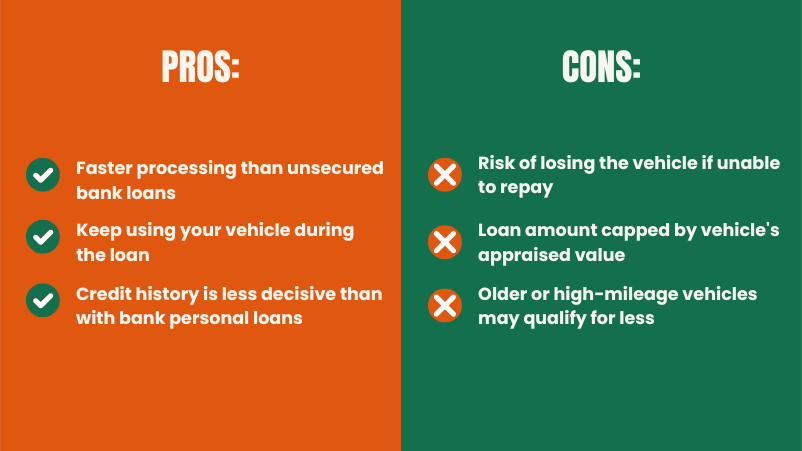
If you own a car but don’t want to sell it, Sangla OR/CR (or “pawning” your vehicle’s registration documents) can be a practical alternative. This method allows you to borrow money using your vehicle as collateral, without giving up possession of the car.
How does it work?
You temporarily surrender the OR/CR documents to a lender, who assesses the vehicle’s value and grants a loan based on that. You still get to use your car, but failure to repay the loan could result in forfeiting ownership. Loan amounts typically range from 70% to 80% of the vehicle’s appraised value.
Example: Juan, a small business owner, needed ₱120,000 for additional inventory but didn’t want to sell the car he relies on for deliveries. Using his vehicle, appraised at ₱250,000, he qualified for a loan of up to ₱175,000–₱200,000 and borrowed only the ₱120,000 he needed, keeping his repayments manageable.
2. Vehicle Financing: Purchase a New or Used Car
Sometimes the reason you’re considering a personal loan is to buy a vehicle. In that case, a dedicated auto loan is almost always the better instrument than an unsecured personal loan — the vehicle itself secures the loan, which typically means higher approvable amounts and structured terms.
How does it work?
Most banks and financing companies in the Philippines offer this type of loan. Typically, down payments range from 20% to 30%, with repayment terms between 12 to 60 months. Some lenders even provide special promos, such as waived processing fees or free insurance.
Example: Mario wanted a reliable vehicle for his family but didn’t have the full cash to buy one. He decided to secure a Vehicle Financing loan for a ₱600,000 car. He made a ₱100,000 down payment, which left him needing to finance ₱500,000. With an interest rate, Mario’s loan was structured over 5 years.

3. Sangla Titulo: Tapping Into Property Equity
For those who own real estate, Sangla Titulo (mortgaging your land title) is an option that provides access to larger sums of money. In this setup, you use your property’s title as collateral for a loan. Given the higher value of real estate compared to cars, loan amounts offered are often significantly higher.
How does it work?
You surrender your property’s title to the lender until the loan is repaid. The process can take longer than other alternatives due to property appraisals, but it’s a viable option for larger financial needs, such as business expansion or home renovations.
Example: Maria needed ₱1 million to expand her small bakery. By mortgaging her family’s property, valued at ₱3 million, she was able to secure the necessary funds with a manageable repayment plan.
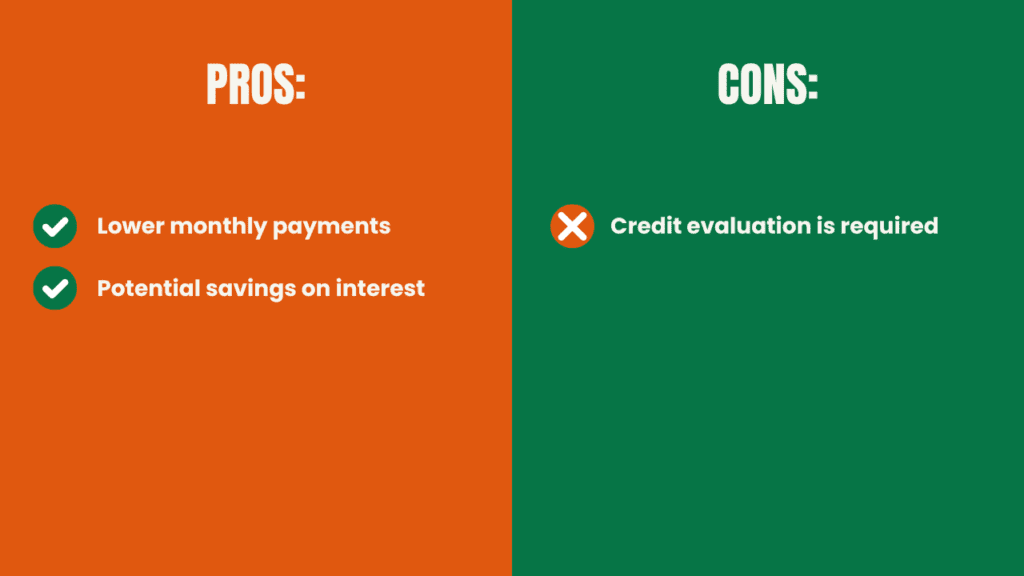
Financial Risk: Defaulting on a Sangla Titulo loan can lead to foreclosure, meaning you could lose your home or property. Ensure that this option aligns with your financial stability and repayment capacity.
Best for: Property owners who need substantial funds and are willing to use their property as collateral.
Other Personal Loan Alternatives Worth Considering

4. SSS and Pag-IBIG salary loans
If you have sufficient contributions, government salary loans offer regulated rates and payroll-friendly repayment. Amounts are tied to your contribution history, and processing can take longer than private options.
5. Cooperative loans
Credit cooperatives lend to members at lenient terms, often with dividends offsetting borrowing costs. The catch: you need to be a member, usually with a share capital requirement and waiting period.
6. Credit card installment plans
For planned purchases, converting to installments can cost less than a short-term cash loan — if you repay within terms. Cash advances, by contrast, carry some of the highest effective rates available and are best avoided.
7. Salary advances
Some employers offer interest-free advances against your next paycheck. Amounts are small, but for a minor shortfall this is often the cheapest money available.
If your situation is urgent, see our guide to emergency loan alternatives in the Philippines. If past credit problems are the obstacle, our guide to bad credit loan alternatives covers options assessed on assets and capacity rather than credit scores.
How to Choose the Right Alternative
Start with three questions. What do you own? A vehicle points to Sangla OR/CR; a titled property points to Sangla Titulo; neither points to government, cooperative, or employer options. How fast do you need it? Collateral loans from financing companies generally move faster than bank or government processing. What can you afford monthly? Never size a loan by what you can borrow — size it by what you can repay. For any secured loan, the collateral is only at risk if repayments fail, so this question matters most.
Conclusion: Choosing the Right Alternative
When exploring personal loan alternatives, always consider the trade-offs—whether it’s the risk of losing your car with Sangla OR/CR or the potential for foreclosure with Sangla Titulo. Make sure you fully understand the terms of the loan and evaluate your capacity to repay. Financial decisions should always align with both your current situation and future goals.