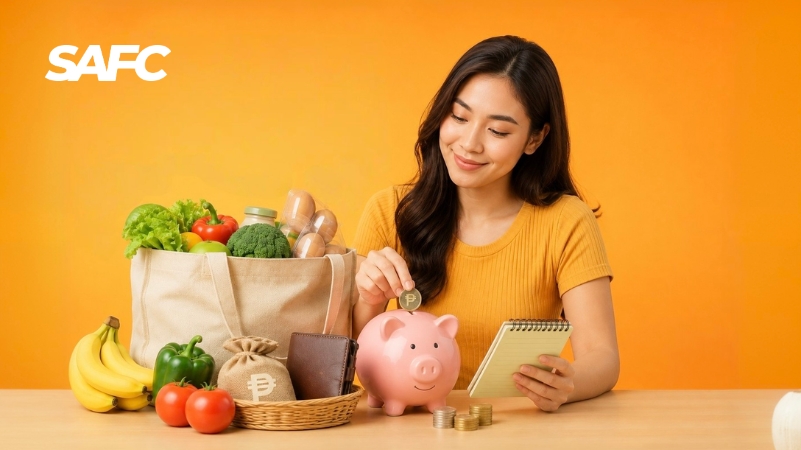
You fill your cart with “just the basics,” reach the counter, and somehow it’s ₱4,000. Sounds familiar? With prices climbing faster than salaries, learning how to save money on groceries in the Philippines has become a real household skill — not just a nice-to-have.
The good news: most grocery overspending comes down to a few fixable habits and knowing where to shop. This guide covers where it’s actually cheaper to buy groceries, the everyday habits that cut your bill, how much a Filipino family should realistically budget, and three simple grocery budgeting rules that make sticking to a plan easier. No extreme cutting, no plain rice and itlog every night — just practical tipid strategies you can use on your next shopping trip.
Where Is It Cheaper to Buy Groceries in the Philippines?
Where you shop can matter more than what you buy. The same items carry very different price tags across store types, so matching each purchase to the right place is one of the fastest ways to lower your bill.
| Where to shop | Best for | Why it’s cheaper | Watch out for |
| Palengke (wet market) | Fresh fish, meat, vegetables, fruits | Prices are a fraction of supermarket rates; produce is often fresher | Bring cash; prices vary by vendor — compare and haggle |
| Budget supermarkets | Rice, canned goods, cooking oil, staples | Lower margins on everyday goods; bulk and member perks | Possibility to overspend without a list |
| Warehouse clubs / Divisoria / wholesalers | Non-perishables and toiletries in bulk | Lowest per-unit cost on high-use items | Only cheaper if you’ll actually use it before it expires |
| Regular supermarkets | Convenience, one-stop shopping, promos | Wide selection, air-conditioned comfort | Higher markups, especially at eye level |
| Convenience stores | Emergencies only | — | Heavily marked-up; avoid for regular groceries |
The verdict: for most households, the cheapest routine is a split trip — fresh produce and meat from the palengke, staples and toiletries in bulk from a budget supermarket or warehouse, and the convenience store reserved for genuine emergencies. Location also matters: groceries in Metro Manila commonly run 30–40% higher than in provincial areas, so provincial shoppers have more room to stretch a peso.
Everyday Habits That Save You Money on Groceries
Where you shop sets the ceiling; your habits decide how close you get to it. These cost nothing to adopt:
- Plan meals at home, on paper, before you leave. Deciding meals in the aisle leads to impulse buys. Walk in with a list, walk out with fewer surprises.
- Check your pantry first. Inventory what you already have so you don’t buy a third bottle of soy sauce. List essentials by priority.
- Never shop hungry. Everything looks essential on an empty stomach. Eat first.
- Choose store brands. House and generic labels for staples like oil, sugar, and canned goods cost less than name brands — often from the same plants. Compare by unit price (per gram or per litre), not per package.
- Stretch meat with vegetables. Half a kilo of pork giniling with sayote, cabbage, or potatoes makes more servings for less. Same flavor, more ulam.
- Buy seasonal produce. When kalabasa or cabbage is in season, it’s cheaper and fresher. Choose what’s in season to get better value.
- Limit processed snacks. Chips, biscuits, and sugary drinks add up fast — cutting two snack items a trip can save a few hundred pesos.
How Much Should a Filipino Family Budget for Groceries?
There’s no single right amount to spend on groceries. It depends on your household size, location, food preferences, and eating habits—but practical benchmarks can help you determine whether your budget is on track.
For current price context, the Philippine Statistics Authority reported that national food inflation remained at 5.3% in July 2026, meaning food prices were generally higher than they were a year earlier. Since PSA does not publish official monthly grocery-budget ranges by household size, the figures below should be treated as practical estimates rather than government-prescribed amounts:
| Household size | Estimated monthly grocery range* |
| One person / solo living | ₱2,000–₱3,500 |
| Couple | ₱4,000–₱6,500 |
| Family of four | ₱8,500–₱13,000 |
| Family of five or more | ₱10,500–₱17,000+ |
These are estimated national planning ranges at July 2026 prices, not official PSA-published ranges. They cover food consumed at home and exclude restaurant meals, delivery fees, rent, utilities, and other household expenses.
Use these as a starting reference, then track your own spending for two to three months. Awareness alone tends to change behavior — once you see the patterns, trimming gets easier.
Framework: 3 Grocery Budgeting Rules That Make Saving Easier
If willpower isn’t enough, a simple rule removes the guesswork. Here are three popular frameworks — pick the one that fits how you think.
1. The 3-3-3 rule (simplest for shopping). Buy three proteins, three carbohydrates, and three fats for the week, then mix and match them across meals. For example: chicken, eggs, and fish; rice, potatoes, and pasta; plus cooking oil, peanut butter, and nuts. A common variation swaps in three vegetables or fruits for the fats. The point isn’t restriction — it’s to stop over-buying, cut food waste, and reduce decision fatigue.
Note: you’ll want to add fruits and vegetables for balance if you use the protein-carb-fat version.
2. The 5-4-3-2-1 rule (for balanced variety). A meal-planning formula for stocking a balanced week — typically five vegetables, four fruits, three proteins, two sauces or dairy, and one “fun” treat. It keeps meals varied while capping how much lands in the cart.
3. The 50/30/20 rule (for your whole salary). Broader than groceries: split your take-home pay into 50% needs, 30% wants, and 20% savings and debt. Groceries sit inside the “needs” bucket, so this rule shows you how much of your income should go to food in the first place — turning grocery tips into part of a full budget.
| Rule | Best for | What it controls |
| 3-3-3 | Simplifying a weekly shop | Over-buying and food waste |
| 5-4-3-2-1 | Balanced, varied meals | Cart composition |
| 50/30/20 | Proper salary allocation | Where groceries fit in your budget |
Key Takeaways
- Where you shop sets the ceiling: palengke for fresh, budget supermarkets and warehouses for bulk staples, convenience stores for emergencies only.
- Habits do the rest: plan at home, shop from a list, never shop hungry, and compare by unit price.
- Know your benchmark: PSA’s latest data show that national food inflation stood at 5.3% in July 2026, while food and non-alcoholic beverage inflation in Metro Manila was 2.1%. Since PSA has not published a newer national food-threshold estimate, use these figures as current price indicators rather than a fixed monthly budget. Actual spending will still depend on household size, location, and eating habits.
- Use a rule to stay consistent: 3-3-3 to simplify shopping, 5-4-3-2-1 for balance, 50/30/20 to fit groceries into your salary.
- Track for 2–3 months. Awareness is what changes spending — not deprivation.
Next Step
Saving on groceries is one piece of a bigger picture: a household budget that actually works. If your grocery bill still feels tight, the fix is usually structuring your whole income, not just cutting food.
Learn how to split your salary the smart way with the 50/30/20 budgeting rule, then build an emergency fund so unexpected costs don’t derail your month.