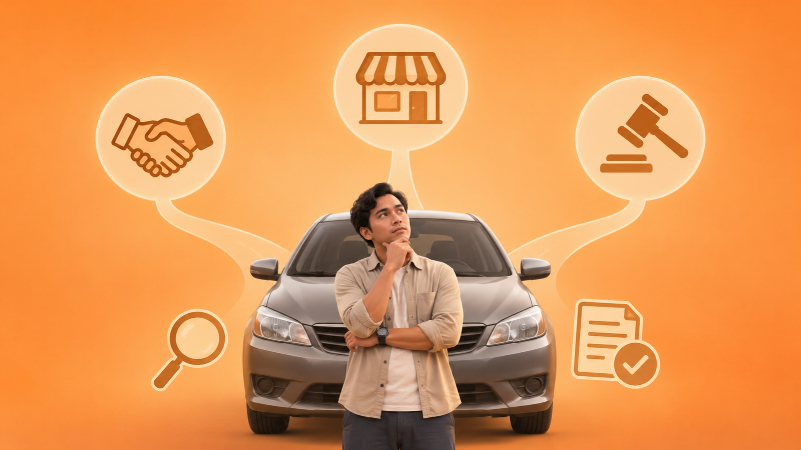
Most people shopping for a second-hand car spend weeks deciding which car to buy. Far fewer think about where to buy it. In the Philippine used car market, that decision can be just as important. It affects how much you pay, the condition of the vehicle, the paperwork involved, and the protection available if something goes wrong.
There’s no single best way to buy a used car in the Philippines. The right option depends on your budget, knowledge of vehicles, and willingness to take on certain risks.
This guide compares the main ways to buy a second-hand car: private sellers, used car dealerships, car auctions, and online marketplaces. We’ll look at their prices, convenience, documentation, buyer protection, and potential drawbacks to help you make a better decision.
Which Buying Method Wins?
| Category | Recommended Channel | Why |
| Best for Budget Buyers | Private Sellers | Prices are often lower, with more room for negotiation |
| Best for First-Time Buyers | Reputable Used Car Dealerships | Inspection, paperwork assistance, and after-sales support may be available |
| Best for Bargain Hunters | Car Auctions | Potentially lower prices, but with greater risks |
| Best for Convenience | Online Used Car Marketplaces | Compare multiple listings without leaving home |
| Best for Vehicle Selection | Established Used Car Dealerships | Access to different brands and models in one location |
Each option has its advantages and disadvantages. Understanding these differences can help you avoid costly mistakes.
Before You Choose: Three Questions to Ask Yourself
1. What’s your actual budget, not just the car’s price?
The purchase price is only part of the expense. You’ll also need to account for ownership transfer, insurance, registration renewal if due, and initial maintenance such as oil changes, filters, tires, and battery replacement.
It’s also wise to keep extra money for unexpected repairs, especially when buying an older vehicle.
2. How confident are you in checking a car’s condition?
A clean exterior doesn’t necessarily mean a car is in good mechanical condition. If you don’t know how to inspect an engine, transmission, or other major components, consider buying from a reputable dealership or bringing a trusted mechanic when viewing private listings and auction units.
3. Are you paying in cash or through financing?
Cash gives you more flexibility when choosing where to buy. If you need financing, your options may be more limited.
Dealerships often work with banks and financing companies, making the application process more convenient. Private sellers and auctions may require you to arrange financing separately before completing the purchase.
Our guide on how a car loan works in the Philippines explains the process.
Option 1: Buying from a Private Seller
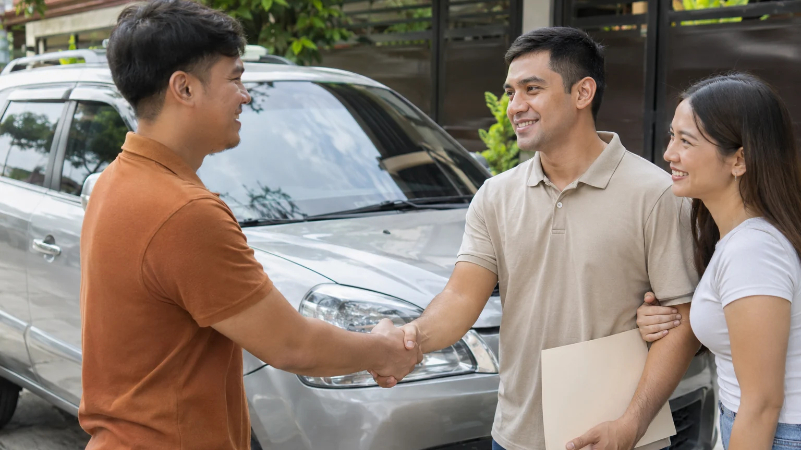
A private sale is a direct transaction between you and the vehicle’s current owner. You can find these listings through social media groups, online marketplaces, personal referrals, or even For Sale signs displayed on vehicles.
Why buyers choose it
- Lower prices. Private sellers may offer lower prices than dealerships because they don’t have the same operating expenses or dealer markup.
- Room to negotiate. Owners who need to sell because of relocation, an upgrade, or financial reasons may be more open to negotiating.
- Direct vehicle history. You can ask the owner about the car’s usage, maintenance, service records, and previous accidents or flooding.
The trade-offs
- Limited buyer protection. Many private sales are made on an as-is basis. If the transmission develops a problem after the purchase, you may have to shoulder the repair costs.
- More paperwork to handle. You’ll need to verify the documents, arrange the deed of sale, and process the transfer of ownership.
- Greater exposure to scams. Fake listings, reservation-fee scams, tampered documents, and unauthorized sellers are some of the risks to watch out for.
How to protect yourself
- Meet the registered owner and check their valid ID against the name on the Certificate of Registration (CR).
- Verify that the engine and chassis numbers match the OR/CR.
- Ask if the vehicle is still under a loan. If the CR shows an encumbrance, make sure the lender’s release documents are properly processed.
- Never send a reservation fee before seeing the vehicle and verifying the seller.
- Bring a trusted mechanic and take the car for a test drive on different road conditions.
Be especially careful with pasalo or assume-balance arrangements, where you take over another person’s remaining car loan. These transactions should be handled with the lender’s knowledge and approval. Read our guide to Pasalo Kotse and how assume balance works to understand the process and its risks.
Best for: Experienced buyers who know how to assess vehicles, have access to a trusted mechanic, and want more room to negotiate.
Option 2: Buying from a Used Car Dealership
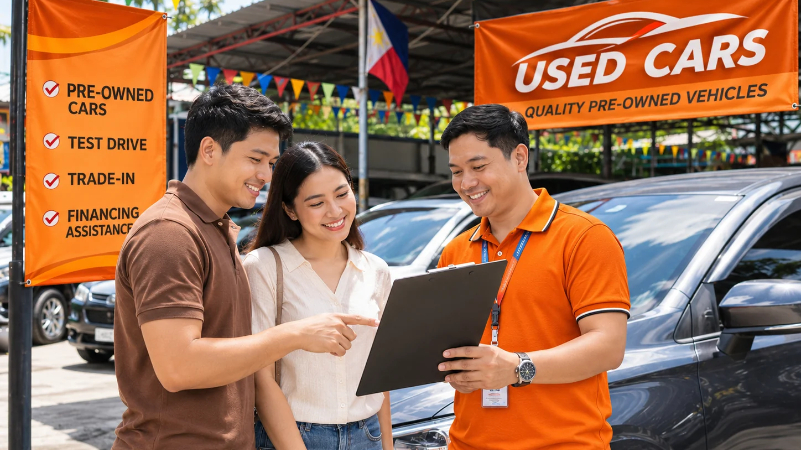
Used car dealerships range from brand-affiliated pre-owned programs to independent businesses selling different makes and models.
Why buyers choose it
- Vehicle inspection. Reputable dealerships generally inspect and prepare their vehicles before offering them for sale. Some also provide warranties, depending on the unit and dealership.
- Paperwork assistance. Many dealerships help prepare the deed of sale and process ownership transfers, making the transaction easier for first-time buyers.
- Financing options. Dealerships often work with banks and financing companies, allowing buyers to explore financing arrangements in one place.
- More choices. You can compare several vehicles, brands, and models during a single visit.
- Business accountability. A dealership with an established location and reputation gives buyers a business to contact if concerns arise after the purchase.
The trade-offs
- Higher prices. Dealership prices may include reconditioning expenses, operating costs, and profit margins.
- Less room to negotiate. Some dealerships have fixed pricing, limiting your ability to bargain.
- Inconsistent vehicle quality. Not every dealership follows the same inspection standards. Some units may have hidden mechanical problems, flood damage, or previous accident repairs.
Questions to ask any used car dealer
- Has the vehicle been involved in a flood or major accident?
- Can I check its maintenance and service records?
- Does it come with a warranty? What parts and repairs are covered, and for how long?
- Who will process the transfer of ownership? Is the cost included in the selling price?
- Can I have my own mechanic inspect the vehicle before purchasing?
A dealership that refuses an independent inspection should give you a reason to reconsider the transaction.
Another point to understand is the Philippine Lemon Law (RA 10642), which generally covers brand-new vehicles rather than ordinary second-hand car purchases. For used vehicles, check the applicable consumer protections and the specific warranty offered by the seller. Always request written warranty terms before paying.
Best for: First-time buyers, people who prefer assistance with paperwork, and those who want to explore financing options.
Option 3: Buying at a Car Auction
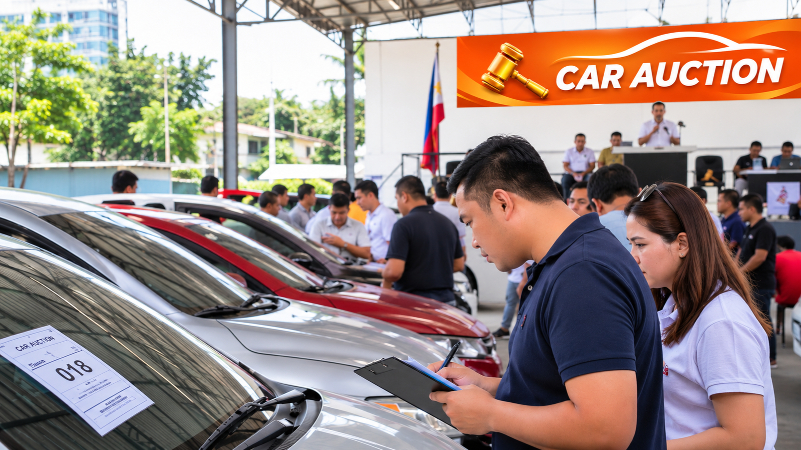
Car auctions in the Philippines can include repossessed vehicles recovered by banks and financing companies from borrowers who were unable to continue their payments. Some auctions also feature retired company and fleet vehicles.
Why buyers choose it
- Potentially lower prices. Repossessed vehicles may be offered below comparable market listings as lenders seek to recover their outstanding balances.
- Institutional sellers. When the seller is a bank or financing company, buyers can deal directly with an established institution rather than an unknown individual.
- Different vehicle options. Auctions may feature sedans, SUVs, pickups, vans, and commercial vehicles.
The trade-offs
- As-is, where-is transactions. Auctioned vehicles are generally sold in their existing condition, with limited or no warranty.
- Limited inspection opportunities. Buyers may only have access to a scheduled viewing period. Test drives may also be restricted, depending on the auction rules.
- Risk of overspending. Competitive bidding can encourage buyers to offer more than their original budget, reducing the potential savings.
- Additional expenses. Depending on the auction, buyers may need to pay bidder deposits, registration fees, repair costs, and outstanding vehicle-related expenses.
Tips for buying at auction
- Read the auction terms and conditions before registering.
- Inspect the vehicle during the designated viewing period. Bring a mechanic if permitted.
- Research the current market price of the same make, model, and year before placing a bid.
- Set a maximum bidding amount and avoid exceeding it.
- Prepare an additional budget for possible repairs and ownership transfer.
SAFC’s Bid Express platform provides another option for buyers interested in auctioned vehicles. Browse the available listings, review the auction requirements, and inspect the units before participating in the bidding process.
Best for: Bargain hunters, vehicle resellers, and experienced buyers who understand the risks of purchasing vehicles in their existing condition.
What About Online Used Car Marketplaces?
Online marketplaces, including classified websites, car-listing platforms, and social media marketplaces, have made it easier to find second-hand vehicles.
However, these platforms aren’t necessarily a separate type of seller. They simply provide a place where private owners and dealerships can advertise their vehicles.
Their biggest advantage is convenience. You can compare prices, locations, mileage, and vehicle models without visiting different sellers in person.
The main risk is that an online listing doesn’t guarantee the seller’s credibility or the vehicle’s condition.
Keep these precautions in mind:
- Verify before visiting. Request clear photos of the OR/CR, with sensitive information covered, and ask for the current odometer reading.
- Be cautious of unusually low prices. Listings priced far below market value may be used to attract buyers into paying fake reservation fees.
- Inspect before paying. Never complete a purchase based only on photos or online conversations.
- Choose a safe meeting place. Meet in a public location or at a verifiable dealership or seller’s address.
Once you find a promising listing, follow the same precautions you would when buying directly from a private seller or dealership.
Best for: Busy buyers who want to compare multiple vehicles quickly before arranging an actual inspection.
Side-by-Side Comparison
| Factor | Private Seller | Dealership | Auction | Online Marketplace |
| Typical Price | Low to moderate | Usually higher | Potentially lowest | Varies by seller |
| Vehicle Condition | Depends on previous owner | Usually inspected | Sold as is | Depends on seller |
| Convenience | Moderate | High | Low to moderate | High for searching |
| Paperwork Assistance | Usually none | Often available | Depends on auctioneer | Depends on seller |
| Buyer Protection | Limited | Depends on warranty and seller | Usually limited | Depends on seller |
| Financing Access | Arrange separately | Often available | Usually arrange separately | Depends on seller |
| Fraud Risk | Requires careful verification | Depends on dealership credibility | Requires checking auction terms | Requires careful verification |
| Best For | Experienced, budget-conscious buyers | First-time buyers | Bargain hunters | Comparison shoppers |
Which Buying Method Is Right for You?
Your preferred buying method should depend on your experience, available budget, and expectations.
Here’s a quick guide:
- “I’m buying my first car and don’t know much about engines.” Start with a reputable dealership. You may pay more, but inspection assistance and paperwork support can make the process easier.
- “I know cars, or I have a mechanic I trust, and I want a lower price.” Consider buying from a private seller, where there’s often more room to negotiate.
- “I’m looking for a bargain and can handle possible repairs.” Explore car auctions, particularly repossessed vehicles, but inspect each unit carefully.
- “I don’t have time to visit different dealerships.” Start with online marketplaces to compare available vehicles, then arrange an in-person inspection.
- “I need financing.” Dealerships may offer a more convenient starting point. You can also explore financing options before purchasing from a private seller or auction.
Still deciding between a brand-new and second-hand vehicle? Read why a second-hand car can be a smarter financial choice than a brand-new one.
Documents to Check, No Matter Where You Buy
Regardless of the seller or buying method, verifying the vehicle’s documents is essential. Before completing the transaction, check the following:
- Original OR/CR: Verify the vehicle’s registration documents and make sure the registered owner’s information matches the seller’s identity.
- Engine and chassis numbers: Confirm that the numbers on the vehicle match those indicated in the OR/CR.
- Deed of Absolute Sale: Make sure the document is properly completed and signed by the parties involved.
- PNP-HPG Motor Vehicle Clearance: Check the applicable clearance requirements for the ownership transfer.
- Release of chattel mortgage: If the vehicle was previously financed and the CR indicates an encumbrance, verify that the mortgage has been properly released.
- Valid identification: Request the seller’s valid IDs and any additional documents required for the transaction.
After purchasing the vehicle, the new owner must process the transfer of ownership with the Land Transportation Office (LTO), following its current requirements.
For a more detailed walkthrough, read our step-by-step guide to buying a secondhand car. You can also learn why you need your OR/CR when driving in the Philippines.
Red Flags in Any Used Car Purchase
Some problems aren’t immediately visible during a vehicle inspection. Pay attention to these warning signs before committing to a purchase:
- The seller cannot present the original OR/CR, or the registered owner’s name doesn’t match their identification.
- The seller pressures you to pay a reservation fee before allowing an inspection.
- The asking price is significantly lower than comparable vehicles without a reasonable explanation.
- There are possible signs of flood damage, such as a musty smell, rust under the seats or dashboard, fogged headlights, or watermarks inside the trunk.
- The seller refuses to allow an independent mechanic to inspect the vehicle.
- The vehicle has mismatched paint, uneven panel gaps, or signs of recent repairs that haven’t been properly disclosed.
Flood damage deserves particular attention in the Philippines, where typhoons and heavy rainfall can expose vehicles to flooding. Some problems may not appear immediately but can affect electrical components, the engine, and other major systems.
Our guide on what to do when your car gets flooded explains the possible effects of water damage and why repairs can become expensive.
The Real Cost of Owning a Used Car, and Where Your Vehicle Can Help
Buying a used car is only the beginning. Once you own it, you’ll need to prepare for recurring expenses such as:
- Annual registration and CTPL insurance
- Comprehensive insurance, if you choose to get additional coverage
- Preventive maintenance, including oil changes, tires, brakes, and battery replacement
- Unexpected repairs, which may become more frequent as the vehicle gets older
Even responsible car owners can encounter unexpected expenses, from major repairs to medical emergencies or urgent business needs. If you already own a vehicle with clean documents, it may also serve as a financial resource.
Through Sangla OR/CR, eligible car owners can use their vehicle’s OR/CR as collateral for a loan while continuing to use their vehicle, subject to the applicable requirements and approval.
This can be an option for owners who need funds for urgent repairs or other expenses but don’t want to sell the vehicle they rely on.
To understand the requirements and process, read our guide on how Sangla OR/CR works.
As with any loan, consider your repayment capacity before applying. Borrow only what you need and can reasonably repay.
The Bottom Line
The best way to buy a used car in the Philippines depends on your experience, budget, and willingness to handle potential risks.
- Want convenience and assistance? Consider a reputable used car dealership.
- Want a lower price and know how to inspect vehicles? Look for a private seller.
- Want potential savings and can handle as-is purchases? Explore car auctions.
- Want to compare different vehicles quickly? Start with online marketplaces, then inspect your preferred units in person.
Whichever option you choose, take time to inspect the vehicle, verify its documents, and understand the terms of the sale before making a payment.