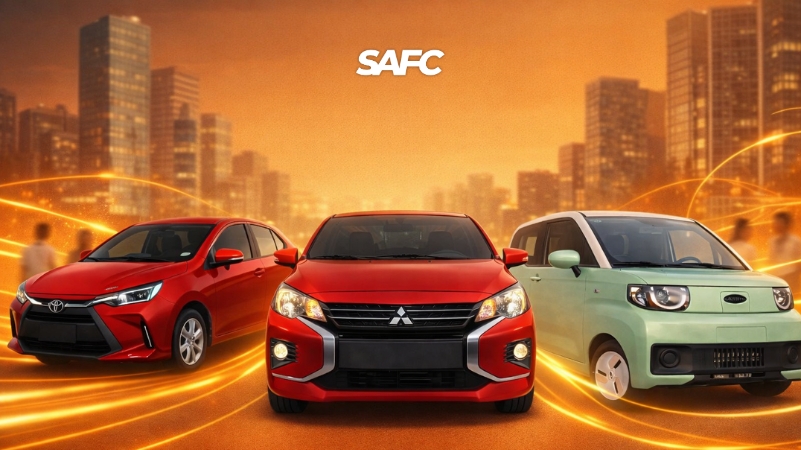
Finding the perfect small car in the Philippines in 2026 has never been easier—or more confusing. With rising fuel prices, tighter city roads, and the growing availability of electric vehicles, choosing the right car is no longer just about price. This guide compares 11 of the best small cars in the Philippines, covering fuel efficiency, features, and real ownership costs so you can make a smart, future-ready decision.
Why Small Cars Are the Smart Choice for Filipino Drivers
Small cars — also called city cars or subcompacts — are vehicles typically under 4 meters in length, seating up to five passengers, and priced below ₱1 million (with a few exceptions). They are designed specifically for the realities of Philippine urban driving: narrow streets, stop-and-go traffic, tight parking, and rising fuel prices.
Here is why they continue to dominate the Philippine car market year after year:
- Lower purchase price — most models fall between ₱600,000 and ₱900,000, making them accessible to a much wider range of buyers and easier to finance.
- Better fuel economy — smaller engines burn less fuel, which matters enormously when you’re spending an hour each day in EDSA traffic.
- Easier to park and maneuver — in dense urban areas like Makati, BGC, and Ortigas, a compact footprint is a genuine daily advantage.
- Lower insurance premiums — smaller, lighter vehicles generally cost less to insure and repair.
- Stronger resale value for top brands — models like the Toyota Wigo and Honda Brio hold their value well, making them sound financial choices.
5 Key Factors to Consider Before Buying a Small Car in the Philippines
Before diving into individual models, here are the five questions every Filipino buyer should answer honestly:
- Budget ceiling — What is your maximum monthly payment, including amortization, fuel, and insurance? Use the ownership cost table in Section 5 of this guide to calculate your real number, not just the sticker price.
- Transmission preference — Do you want a manual or automatic? In Metro Manila traffic, many buyers prefer a CVT or automatic for comfort, but manual variants are significantly cheaper and offer better fuel economy on the highway.
- Daily driving distance — If you drive more than 60 km per day, fuel efficiency becomes critical. If you drive less than 40 km, an EV may actually be cheaper to run long-term.
- After-sales network — Does the brand have a dealership and service center near your home or office? For newer brands like BYD and VinFast, this is a real concern worth researching before you sign.
- Use case — Are you buying a daily commuter, a Grab/TNVS vehicle, or a family second car? Your answer changes which model makes the most sense.
| Tip: Before visiting any dealership, use this guide’s ownership cost table to calculate your estimated total monthly cost — not just the monthly amortization. Many first-time buyers underestimate fuel and insurance costs by 30 to 40 percent. |
Top Small Gasoline Cars in the Philippines (Under ₱1 Million)
The gasoline hatchback and sedan segment remains the most practical choice for the majority of Filipino buyers in 2026, particularly those outside Metro Manila or without access to home charging. Here are the eight best models currently available.
1. Toyota Wigo — Best for First-Time Buyers
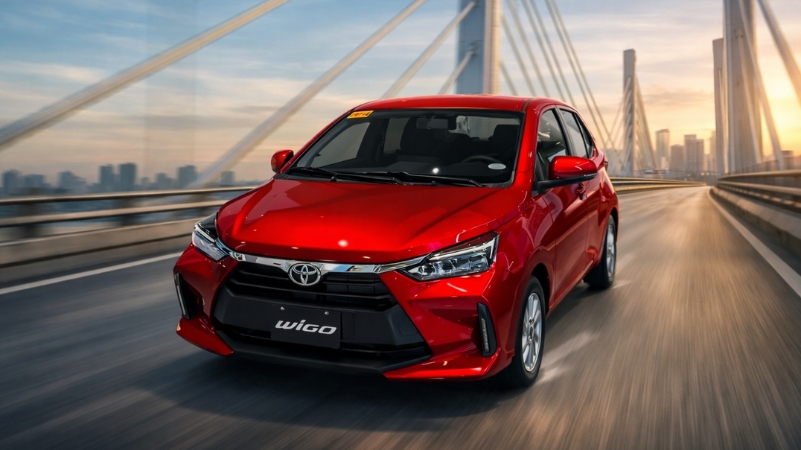
Price: ₱615,000 – ₱735,000 | Engine: 1.0L, 65 hp, 89 Nm | Fuel Economy: ~10.5 km/L city / ~20.0 km/L highway
The Toyota Wigo continues to be the best-selling small car in the Philippines for good reason. Its 2026 update brings a refreshed exterior, improved interior quality, and most importantly, Apple CarPlay and Android Auto on the top-spec G CVT variant — a feature that eluded the Wigo for years.
Its 1.0-liter engine is modest by any measure, but it is more than sufficient for Metro Manila commuting. The Wigo’s real advantage is not in its specs but in what surrounds it: Toyota’s nationwide dealership network is the most extensive in the country, meaning parts are always available, service is consistent, and resale value is among the strongest in its class.
- Widest after-sales network in the Philippines — a significant advantage for provincial buyers.
- Top-spec G CVT includes Apple CarPlay, Android Auto, and a reverse camera.
- Strong resale value — Wigos hold approximately 60 to 65 percent of their value after three years.
- 4-speed automatic on the base E CVT variant feels dated compared to newer CVTs on rival models.
Best For: First-time car owners who prioritize reliability, after-sales support, and long-term resale value over outright performance.
| Note: The Wigo’s ₱615,000 entry price makes it one of the most accessible models to finance in this segment. With a standard 20% down payment and a 36-month term, estimated monthly amortization starts at approximately ₱8,500 to ₱10,000 depending on interest rate. Ask SAFC about flexible terms tailored to your income. |
2. Kia Soluto — Best for Practical Buyers Who Want Comfort and Value

Price: ₱780,000 – ₱970,000 | Engine: 1.4L, 94 hp, 132 Nm | Fuel Economy: ~10–12 km/L city / ~18–20 km/L highway
The Kia Soluto 2026 takes a more practical and comfort-focused approach compared to typical small cars in this segment. Instead of going for a sporty hatchback vibe, it offers a compact sedan design that feels more mature, spacious, and family-friendly.
Inside, the Soluto stands out with its roomy cabin and comfortable seating, especially for rear passengers—something you don’t always get in entry-level cars. The ride quality is also one of its strong points, absorbing bumps well and making daily city drives smoother and less tiring.
Power comes from a 1.4-liter engine that delivers adequate performance for everyday use. It’s not built for speed, but it’s reliable, efficient, and easy to drive—perfect for commuting, errands, or even light out-of-town trips. Fuel efficiency is competitive, making it a smart choice for budget-conscious drivers.
- 94 hp engine offers balanced performance for daily driving needs.
- Spacious interior and comfortable ride—ideal for passengers and longer trips.
- 8-inch touchscreen infotainment system with Apple CarPlay and Android Auto (higher trims).
- Not as sporty or powerful as hatchback rivals—built more for comfort than performance.
Best For: Practical buyers, small families, and first-time car owners who want a comfortable, budget-friendly sedan with solid features and everyday usability.
3. Mitsubishi Mirage — Best for Fuel Efficiency
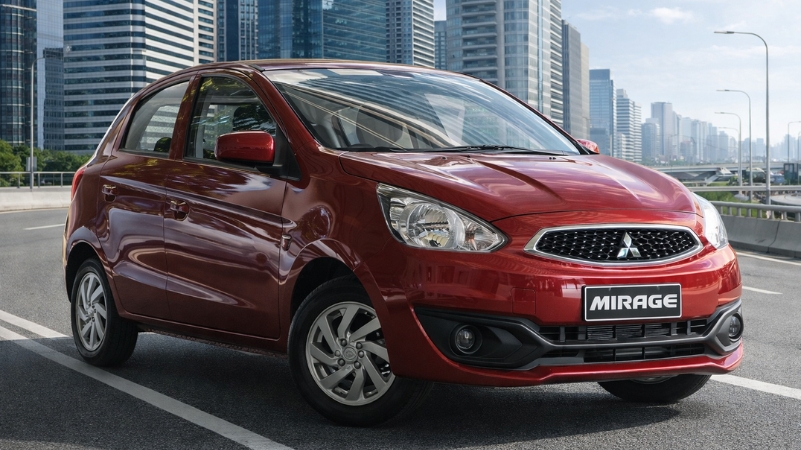
Price: ₱657,000 – ₱744,000 | Engine: 1.2L, 77 hp, 100 Nm | Fuel Economy: 12.0 km/L city / ~23.0 km/L highway
If fuel efficiency is your primary concern, the Mitsubishi Mirage wins this category outright. Its 12.0 km/L city figure is the highest among gasoline hatchbacks currently sold in the Philippines — and that gap is meaningful. In Manila traffic, driving 1,500 km per month, the Mirage will use roughly 125 liters of fuel versus the Honda Brio’s 172 liters. At current pump prices, that is a monthly saving of approximately ₱800 to ₱1,000.
The Mirage also carries a notable distinction: it is assembled in the Philippines, which means parts availability is strong and local content is high. Its cabin is no-frills — the infotainment system is a basic 6.75-inch unit with no wireless CarPlay — but it does exactly what it promises and does it efficiently.
- 12.0 km/L city is the fuel economy class leader among gasoline hatchbacks on this list.
- Philippine-assembled: stronger parts availability and shorter service wait times.
- Light body and small engine make it feel agile in tight urban environments.
- Infotainment system is dated — no Apple CarPlay or Android Auto on any variant.
Best For: Budget-conscious buyers who drive frequently in Metro Manila and want to minimize monthly fuel spend above all other considerations.
4. Suzuki Celerio — Best Budget Pick with Offline Navigation
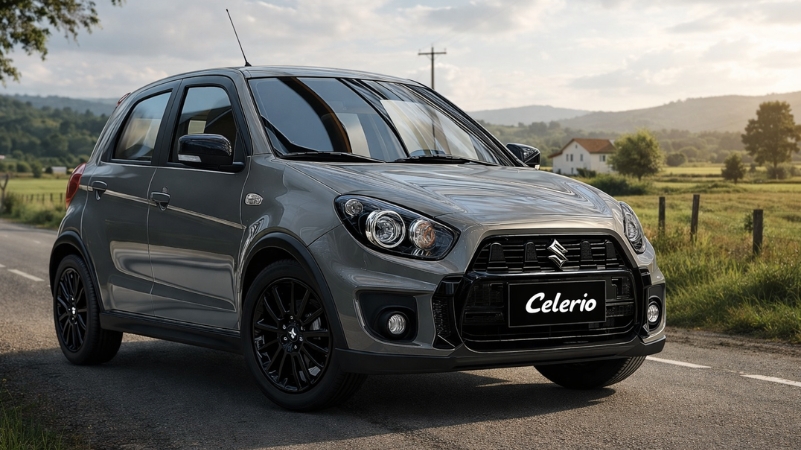
Price: ₱708,000 – ₱754,000 | Engine: 1.0L, 67 hp, 90 Nm | Fuel Economy: 11.0 km/L city / ~24.0 km/L highway
The Suzuki Celerio has been a fixture in the Philippine small car market since 2014 and it remains a quietly excellent value proposition. Its 7-inch touchscreen includes Bluetooth, USB, AUX, and — uniquely for its price bracket — offline navigation capability. In a country where mobile data is not always reliable on provincial roads, this feature is more useful than it might initially appear.
The 1.0-liter engine is adequate for city driving but will feel strained on expressways or steep inclines. The Celerio’s 24.0 km/L highway figure is the highest on this gasoline list, making it an interesting option for buyers who do regular inter-city driving on weekends. The Auto Gear Shift (AGS) transmission option mimics an automatic but requires some adjustment — it suits stop-and-go city driving better than sustained highway speeds.
- Offline navigation at this price point is a genuinely useful and underrated feature.
- 11.0 km/L city and 24.0 km/L highway — excellent across both duty cycles.
- Hill Hold Control on the AGS variant adds practical safety in hilly areas.
- 1.0L engine is underpowered for highway overtaking — best suited to city use.
Best For: Budget-conscious buyers who do occasional inter-city or provincial driving and value offline navigation for connectivity-poor routes.
5. Suzuki S-Presso — Best for Flood-Prone Areas
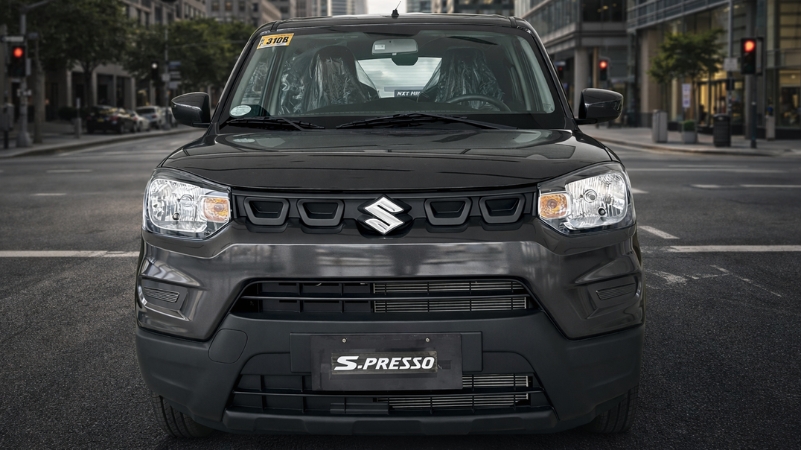
Price: ₱634,000 – ₱674,000 | Engine: 1.0L, 67 hp, 90 Nm | Fuel Economy: ~11.0 km/L city / ~25.0 km/L highway
The Suzuki S-Presso is an often-overlooked car that deserves more attention in the Philippine context. Its micro-SUV-inspired design is not just aesthetic — the S-Presso sits noticeably higher off the ground than most of its hatchback rivals. In a country where flash flooding turns streets into wading pools during the rainy season, that extra ground clearance is a practical, meaningful advantage.
It is also the most affordable model in this lineup with the AGS automatic option, making it the cheapest way to get an automatic transmission in a new small car in 2026. The cabin is compact — rear seat legroom will be tight for passengers over 5’7″ — but the upright seating position and commanding view out front compensate somewhat for the tight quarters.
- Higher ground clearance than any hatchback rival — a real advantage during Philippine rainy season flooding.
- Most affordable model with an automatic (AGS) transmission option at under ₱675,000.
- Engine Auto Start-Stop (EASS) reduces idle fuel consumption in traffic.
- Rear seat legroom is genuinely limited — not ideal for taller rear passengers or long trips.
Best For: Buyers in flood-prone areas like parts of Metro Manila, Pampanga, and low-lying provincial cities who need a budget automatic with practical ground clearance.
6. Suzuki Swift — Best Premium Hatchback Under ₱1 Million
Price: ₱972,000 | Engine: 1.2L, 82 hp, 113 Nm | Fuel Economy: 11.5 km/L city / ~21.5 km/L highway
The Suzuki Swift is the most premium feeling hatchback on this list and the only one available exclusively with a CVT — there is no manual option. Its 8-inch touchscreen is the largest infotainment display in this segment, and the automatic climate control dials give the cabin a feel that genuinely rivals cars in the next price tier.
At ₱989,000, the Swift is right at the edge of this segment’s ceiling, and buyers should weigh it carefully against entry-level crossovers like the Kia Stonic or the Suzuki Dzire+. However, for those who want the driving personality of a hatchback with a genuinely pleasant interior, the Swift delivers in a way that its Suzuki siblings do not.
- Largest infotainment screen (8-inch) in the small hatchback segment.
- Automatic climate control is a rarity at this price — a daily comfort upgrade.
- Handles with more road feel and engagement than most city car rivals.
- CVT-only — no manual option, and no Apple CarPlay or Android Auto.
- At ₱989,000, it competes with entry-level crossovers — buyers should compare before deciding.
Best For: Buyers who want a premium-feel daily driver and do not require the cargo flexibility of a sedan or the off-road capability of a crossover.
7. Mitsubishi Mirage G4 — Best Sedan for Grab Drivers
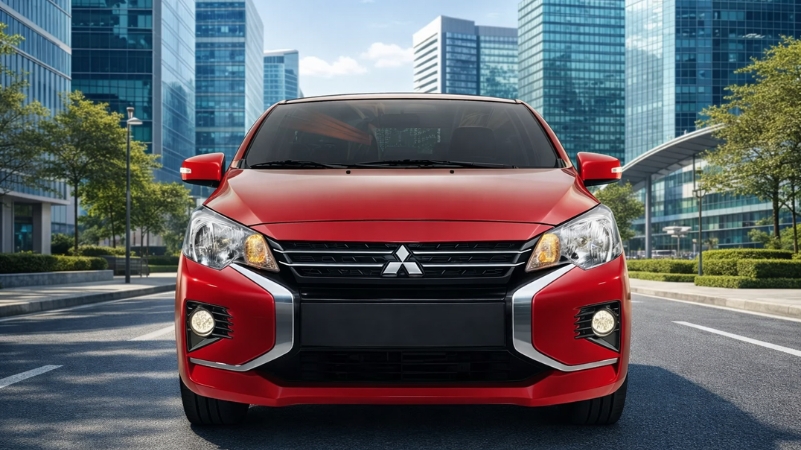
Price: ₱760,000 – ₱929,000 | Engine: 1.2L, 77 hp, 100 Nm | Fuel Economy: ~12.0 km/L city / ~23.0 km/L highway
The Mirage G4 is the sedan version of the Mirage hatchback and it carries across all of its sibling’s strengths: class-leading fuel economy, Philippine assembly, and a light, easy-to-drive character. The added trunk provides genuinely useful cargo space — 368 liters — that makes it significantly more practical than any hatchback on this list for buyers who regularly carry luggage, equipment, or groceries.
For TNVS (Grab) operators, the G4 makes particular sense. TNVS regulations in some cities require sedans, and the Mirage G4’s fuel economy directly translates into lower operating costs per kilometer — a number that compounds significantly over 50,000 to 100,000 kilometers of commercial use. Its 6.75-inch infotainment unit is basic, but passengers in the rear seat benefit from a more spacious, conventional sedan layout.
- 368-liter trunk — the most practical cargo space among all sedan options on this list.
- ~12.0 km/L city fuel economy makes it among the lowest-cost-per-kilometer vehicles in this segment.
- Philippine-assembled — strong parts availability, shorter service turnaround.
- Infotainment system is dated with no CarPlay or Android Auto on any variant.
Best For: TNVS/Grab operators, small families who need sedan practicality, and buyers who prioritize long-term running costs over features.
8. Suzuki Dzire — Best Budget Sedan
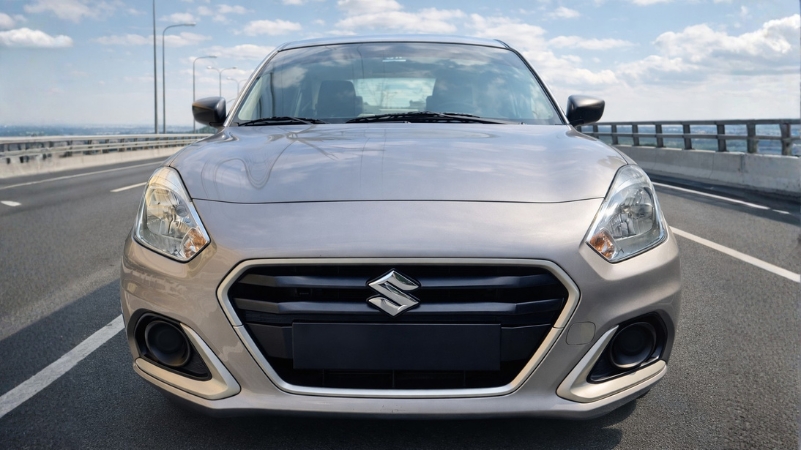
Price: ₱609,000 – ₱819,000 | Engine: 1.2L, 82 hp, 113 Nm | Fuel Economy: 11.0 km/L city / ~20.4 km/L highway
The Suzuki Dzire holds the distinction of being the most affordable new sedan you can buy in the Philippines in 2026, with its base MT variant starting at ₱609,000. Its 1.2-liter engine shares its block with the Swift and delivers adequate performance for city use, while the top-spec AGS variant adds an automated clutch system that functions as an automatic in stop-and-go traffic.
A note of honesty about the AGS transmission: it is not a conventional automatic. It operates by automatically engaging and disengaging the clutch, which can produce a slight jerk during gear changes that some drivers find uncomfortable initially. In dense city traffic, you adapt quickly and appreciate the convenience; on long highway stretches, a conventional CVT would feel smoother. Factor this into your decision if you do significant highway driving.
- Most affordable new sedan in the Philippines at ₱609,000 for the MT variant.
- 7-inch touchscreen with Bluetooth and offline navigation on higher trims.
- Spacious cabin for a vehicle at this price point — front occupants are well-served.
- AGS transmission has a learning curve — not as smooth as a conventional CVT.
Best For: First-time sedan buyers, TNVS applicants on a strict budget, and buyers who want the utility of a trunk without exceeding ₱820,000.
Electric Small Cars in the Philippines: Are They Worth It in 2026?
Electric vehicles are no longer a novelty in the Philippines. Three genuinely affordable EVs now compete directly with gasoline hatchbacks in the sub-₱900,000 segment, and the case for going electric is stronger than it has ever been — with important caveats that every Filipino buyer should understand before signing.
| EV Reality Check for Filipino Buyers EVs are most practical for: buyers with a dedicated parking space that has an electrical outlet (house or garage), drivers whose daily commute is under 100 km round trip, and households with a Meralco connection (for lower home charging costs). Condo residents without EV charging infrastructure, provincial buyers with long inter-city routes, and buyers who regularly drive beyond 200 km in a single day should evaluate EVs carefully before committing. |
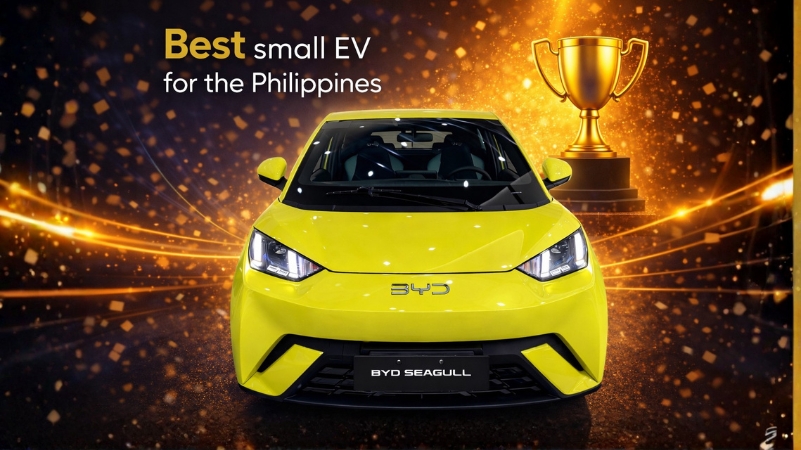
9. BYD Seagull — Best EV for Metro Manila Commuters

Price: ₱898,000 | Battery: 30.08 kWh BYD Blade | Range: 300+ km (CLTC) | Motor: 74 hp, 135 Nm
The BYD Seagull is the most compelling electric vehicle in the Philippine small car segment in 2026. Its 30 kWh Blade Battery delivers a CLTC-rated range of over 300 km — more than enough for a full week of Metro Manila commuting on a single charge for most drivers. It accelerates from 0 to 50 km/h in 4.9 seconds and tops out at 130 km/h, making it fully capable on expressways.
AC charging (via a standard outlet) brings the Seagull to full charge in approximately 8 to 10 hours — practical for overnight home charging. DC fast charging, where available, significantly reduces that time. BYD’s Philippine dealer network is growing rapidly and is now represented in Metro Manila, Cebu, and several provincial capitals.
- 300+ km CLTC range — more than sufficient for weekly Metro Manila use without mid-week charging.
- BYD Blade Battery has an industry-leading safety track record.
- Apple CarPlay and Android Auto standard.
- Range figure is CLTC-rated (Chinese standard) — real-world Philippine range may be 240 to 270 km depending on AC use and driving style.
- DC fast charging infrastructure in the Philippines is still developing — verify stations near your route before purchasing.
Best For: Metro Manila commuters with home charging access who drive less than 150 km daily and want to dramatically cut monthly fuel costs.
10. VinFast VF 3 — Best for Short City Commutes

Price: ₱645,000 | Battery: 18.08 kWh | Range: ~200 km (WLTP) | Motor: 43 hp, 135 Nm
The VinFast VF 3 is the most affordable electric vehicle currently sold by an established brand in the Philippines. Its 18 kWh battery provides a rated range of approximately 200 km, which in real-world Philippine conditions (AC on, city traffic) will be closer to 150 to 170 km. For a driver whose round-trip daily commute is under 80 km, this is more than adequate and the low purchase price is genuinely attractive.
The honest concern with the VF 3 is after-sales. VinFast is a Vietnamese brand with limited dealership presence in the Philippines. Before purchasing, buyers should confirm: where is the nearest VinFast service center? What is the part’s lead time? What does the battery warranty cover and for how many kilometers? These are reasonable due-diligence questions for any new entrant brand.
- Most affordable EV from an established brand at ₱645,000 — price is a genuine differentiator.
- Touchscreen infotainment and modern safety features included standard.
- VinFast’s Philippine after-sales network is still limited — verify service center locations before purchasing.
- Real-world range with AC in Metro Manila will be significantly below the rated 200 km figure.
Best For: Short-commute urban buyers who want EV economics at the lowest possible entry price and are within practical distance of a VinFast service center.
11. Jetour Ice Cream EV — Most Affordable EV Option

Price: ₱699,000 | Battery: 20 kWh | Range: ~200 km | Motor: 27 hp, approx. 85 Nm
The Jetour Ice Cream EV is the most eye-catching entry on this list — its rounded, retro-inspired design is deliberately playful and will appeal to buyers who want their car to be a personality statement. At ₱699,000, it sits between the VF 3 and the Seagull in price, but with a smaller 20 kWh battery and a modest 27 hp motor, its specifications are the most conservative of the three EVs.
As with the VF 3, the critical question for Jetour is after-sales support. Jetour entered the Philippine market recently and its service network is still thin. For a vehicle relying on battery technology that requires specialized diagnostics and calibration, brand support infrastructure matters more than it does for a simple gasoline engine. Buy with that in mind.
- Distinctive, playful design — the most visually distinctive car on this entire list.
- 20 kWh battery offers adequate range for short-commute urban buyers.
- Jetour’s Philippine dealership and service network is currently very limited.
- 27 hp motor is the weakest on this list — performance will feel constrained at highway speeds.
Best For: Urban buyers with short daily commutes (under 60 km round trip) who prioritize design and EV economics, and are comfortable with a newer brand’s limited service network.
EV Buying Checklist for Filipino Drivers
Before committing to an electric vehicle in the Philippines, answer these questions honestly:
- Do you have a dedicated parking space (house garage or covered slot) with access to an electrical outlet?
- Is your daily commute consistently under 120 km round trip?
- Are there EV charging stations near your workplace or along your regular routes?
- If you live in a condo, has your building installed or approved EV charging infrastructure?
- Have you verified the location of the nearest authorized service center for your chosen EV brand?
- Are you comfortable with the brand’s battery warranty terms and conditions?
If you answered ‘no’ to three or more of these questions, a fuel-efficient gasoline model like the Mitsubishi Mirage or Suzuki Celerio may be a more practical choice at this stage.
True Monthly Cost of Owning a Small Car in the Philippines
The purchase price is only one part of what a car actually costs you. First-time buyers in particular often underestimate the monthly running costs that stack on top of the amortization. The table below gives you a realistic cost breakdown comparing a gasoline small car (Toyota Wigo) against an EV (BYD Seagull).
| Cost Component | Toyota Wigo (Gas) | BYD Seagull (EV) | Notes |
| Monthly amortization* | ~₱8,500 – ₱11,000 | ~₱14,000 – ₱17,000 | Based on 36-mo term, 20% DP |
| Fuel / Charging | ~₱4,000 – ₱6,000 | ~₱1,200 – ₱1,800 | Based on avg Metro MNL usage |
| Insurance (annual ÷ 12) | ~₱1,500 – ₱2,500 | ~₱2,000 – ₱3,000 | Comprehensive varies by age |
| PMS / Maintenance | ~₱800 – ₱1,200 | ~₱300 – ₱600 | EVs need less frequent PMS |
| Estimated Monthly Total | ~₱14,800 – ₱20,700 | ~₱17,500 – ₱22,400 | EV gap narrows over time |
* Amortization estimates assume 20% down payment. Fuel cost is based on 1,500 km/month at ₱3.20/km for gasoline and ₱0.80/km for EV (Meralco rate). Figures are approximate and vary by lender, insurer, and usage pattern.
The key insight from this comparison: the BYD Seagull’s monthly fuel savings of approximately ₱3,500 to ₱4,500 partially offset its higher purchase price. Over a 36-month ownership period, an EV owner can save approximately ₱126,000 to ₱162,000 in fuel costs alone — a meaningful amount that gradually narrows the gap in total monthly cost.
Car Insurance in the Philippines: What Small Car Buyers Need to Know
Car insurance in the Philippines comes in two forms: Third Party Liability (TPL), which is legally required and covers damage you cause to others, and Comprehensive Insurance, which adds coverage for your own vehicle against theft, accidents, and natural disasters.
For small cars in the ₱600,000 to ₱900,000 range, typical annual insurance costs are:
- TPL only: ₱2,500 to ₱4,000 per year (mandatory minimum).
- Comprehensive: ₱18,000 to ₱30,000 per year, depending on vehicle value, driver age, and location.
For a financed vehicle, most lenders — including SAFC — will require comprehensive insurance for the duration of the loan. Factor this into your monthly budget calculation.
How Car Financing Works — and How SAFC Can Help
When buying a car through financing, you have two main options: in-house dealer financing (arranged directly through the car brand’s financing arm) and third-party financing through trusted institutions like SAFC. Both can be competitive, but they differ in important ways.
In-house financing is convenient and sometimes offers promotional rates, but approval criteria can be strict — particularly for self-employed applicants or those without a formal payslip. Third-party financing through SAFC is often more flexible, with terms designed to accommodate a wider range of income types and employment situations.
SAFC offers car loan financing with:
- Flexible repayment terms from 12 to 60 months.
- Loan amounts accessible for both new and used vehicles.
- Application processes designed for salaried employees, self-employed individuals, and OFW families.
Checking your eligibility takes only a few minutes and does not affect your credit score. Visit safc.com.ph or approach any SAFC branch to begin.
| SAFC Application Tip Bring these documents to your SAFC car loan application: valid government-issued ID, proof of income (payslip, ITR, or business registration for self-employed),and a proof of billing address. Having these ready reduces processing time significantly. |
Which Small Car Is Right for You? (By Use Case)
Based on the full analysis in this guide, here are the clearest recommendations by buyer type:
Best small car for first-time buyers

Recommendation: Toyota Wigo (G CVT) — The combination of Toyota’s reliability record, the most extensive after-sales network in the Philippines, strong resale value, and now Apple CarPlay on the top variant makes the Wigo the safest and most well-rounded first car purchase in 2026. Finance it through SAFC for accessible monthly terms.
Best small car for Grab / TNVS operators

Recommendation: Mitsubishi Mirage G4 or Suzuki Dzire — Sedan body style satisfies TNVS requirements in most cities, and both models offer the fuel efficiency and reliability needed to keep operating costs low across high-mileage commercial use. The Mirage G4 edges ahead on fuel economy; the Dzire wins on entry price.
Best small car for fuel efficiency in Metro Manila
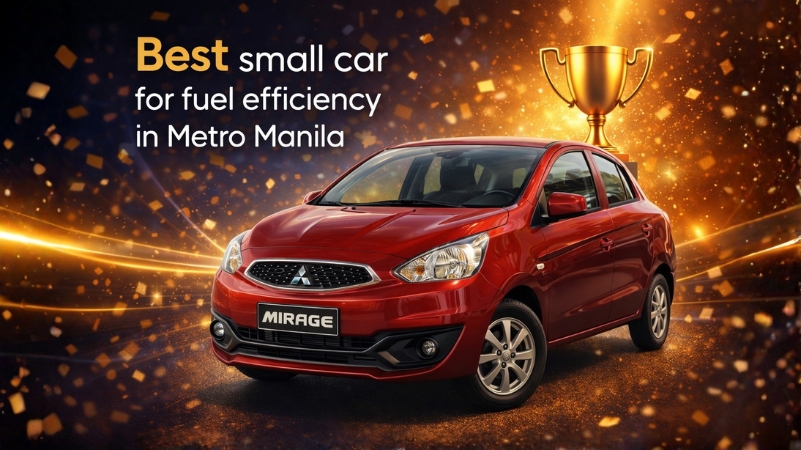
Recommendation: Mitsubishi Mirage (hatchback) — 12.0 km/L in the city is the gasoline class leader. If you are EV-ready, the BYD Seagull offers even lower effective running costs at approximately ₱0.80 per km versus ₱3.00 to ₱3.50 per km for gasoline.
Best small car for flood-prone areas

Recommendation: Suzuki S-Presso — Its higher ground clearance is the only meaningful differentiator in this category, and in the Philippine context — where streets in areas like Bulacan, parts of Cavite, and low-lying Metro Manila barangays regularly flood during rainy season — it is a practical, not cosmetic, advantage.
Best small EV for the Philippines in 2026
Recommendation: BYD Seagull — Superior range, established brand support, and a growing Philippine dealer network make it the most defensible EV purchase in this segment. The VinFast VF 3 is worth considering if budget is the primary constraint and you are within range of a service center.